Non Dubito
繁體中文
← 藝術作品細讀

NON DUBITO · 書法 · 中國書法

《禮器碑》:細線如何托住突然變重的一筆

“更”的右下部忽然重了起來。

這篇談什麼

“更”的右下部忽然重了起來。圖1左半開中列第五字,上部幾道細線圍出小小的格子,下面的一筆卻向右下展開,收成寬而尖的末端。眼睛剛剛適應那組疏瘦的線,便遇見一塊明顯增加的分量。

往上看,“宅”的曲線也向旁邊伸出,卻沒有同樣寬厚的結尾;隔着一列,“車”的底橫又在右端挑起。不是每一個橫畫都一樣細,也不是每個長筆都要變成相同的尾巴。《禮器碑》的緊張感,首先來自這一開裏細線與重筆不斷改變的比例。
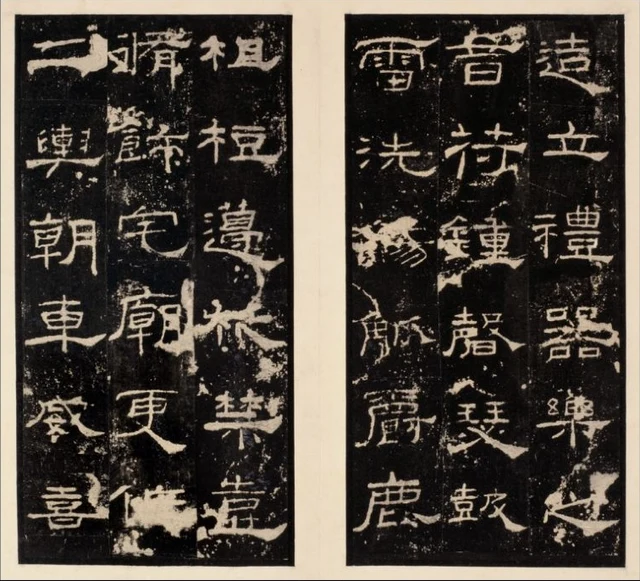
《禮器碑》造立禮器段,左半開中列可見“宅廟更”,右半開保留“造立禮器樂之”等列
圖1 右半開最右列爲“造立禮器樂之”,中列爲“音符鐘磬瑟鼓”;左半開中列第三至第五字爲“宅廟更”。北京故宮博物院藏明拓本,官網高清放大器顯示的整開攝影截圖,僅裁去界面。 官方高清放大前往館方作品頁查看原圖 ↗

“更”在這裏讀作更新的“更”。碑文說韓勅“修飾宅廟,更作二輿”,即修整孔廟,重新製作兩輛車輿。它是一段關於物品、營造與禮儀設施的記載。這個字的意義讓我們知道事情往哪裏走;那根由細轉寬的線,則另給目光一次可以停留的轉折。

一座廟,一塊石,後來的一冊拓紙

《禮器碑》立於東漢永壽二年(156),記魯相韓勅修飾孔廟、製作禮器之事,原碑原存山東曲阜孔廟,現藏曲阜漢魏碑刻陳列館。原石現藏地說明 本文採用故宮博物院藏明拓《魯相韓勅造孔廟禮器碑》冊,文物號新00044512;館方說明此本保留碑陽、碑陰、碑側,並有張伯英題簽。我們看的是明代從漢石拓出的紙本及其後來的冊頁形態。故宮藏品說明;數字文物庫藏品記錄

拓本把凹入石面的字口留成淺色,周圍則以墨呈深色。它傳遞的線條經過書寫、刊刻、石面變化與傳拓,不能直接等同於一張保存完好的漢代墨稿。這裏的細與厚,是眼前影像裏可比較的形態;紙墨、拓工和攝影都會參與它們的出現。

冊頁又把長列剪開,重新排成眼前的短列。以下保留整開,是爲了讓每一個討論的字都有鄰字可比;圖中的裝裱接縫不是原碑的行界。正文與題名也分別辨認:頌述修廟功績的文字、出資者留下的記錄,並不承擔同一種敘述工作。

“器”很複雜,細線卻把它打開了

把目光移到圖1右半開最右列。“造”“立”之後是“禮”“器”,再下面爲“樂”“之”。這一列從筆畫較少的“立”進入複雜的“禮”“器”,又在末尾回到簡短的“之”,字的內部容量幾次改變。

“器”裏有幾個小“口”。在這件拓本裏,上下成組的開口沒有熔成一塊淺色斑,細橫、短豎仍在劃分內部。看完“器”,再看它上面的“禮”:左邊的示旁較疏,右邊細線層疊,左右並不均勻分配密度。多筆畫沒有堵住字,反而使小小的黑色空處成爲眼睛進入結構的入口。

接着看旁邊“音符鐘磬瑟鼓”一列。這裏列的是禮樂設施中的聲響與樂器,碑文節引爲:“君於是造立禮器,樂之音符,鐘磬瑟鼓。”意思是,韓君製作禮器和音樂所用的器具,包括鐘、磬、瑟、鼓。鐘與磬的擊響、瑟的絃聲、鼓的震動,在文字裏各有名稱。圖中的“瑟”又把密集的上部與向右下伸展的末筆放在一起;鄰近的“鼓”也有一筆向外放出,但內部部件的支點與“瑟”不同。

辨出這些樂器,並不是爲了從字裏聽出當年的真實聲響。它讓我們知道,這一段不是抽象的“禮”字在反覆自讚,而是逐件列舉要建造、要使用的東西。書法則把器物清單變成了一段疏密不斷轉換的可見次序:密處需要細線分開,疏處容許一筆突然增加重量。

“更”的變化因此有了鄰近的尺度。若孤零零把它放大,只容易看見右下那一下;保留“宅”“廟”“車”和“禮”“器”,才知道這一筆究竟相對於什麼顯得重。重不是一個字的永久屬性,它是在同一張拓紙上的比較中被看見的。

兩個“王”,把穩定寫得不一樣
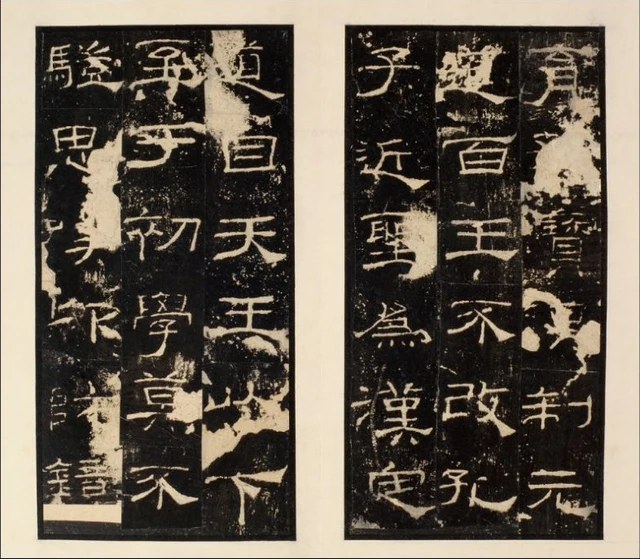
《禮器碑》“百王不改”段,左右半開各有一“王”,保留損泐與鄰列
圖2 右半開中列第三字爲“王”,上下接“百”與“不”;左半開右列第四字也爲“王”,上接“天”。兩字都保留在各自的相鄰字列中。故宮明拓本,官方放大器攝影截圖。 官方高清放大前往館方作品頁查看原圖 ↗

圖2右半開中列,可以接着讀“百王不改”。這是稱述禮制與聖人之道歷經諸王而不改的語句。此處的“王”有很簡單的骨架:幾道橫線與穿過它們的中豎。上面兩橫較細,底橫向右行進時增加了寬度,端部使這個本來很省筆的字突然有了重量。

左半開右列,“天”下面又有一個“王”。它的底橫右端同樣醒目,但下斜、收束的樣子與右頁那個並不重合。兩個字仍保持可辨的三橫關係;同樣的骨架,沒有約束它們只能獲得同一條底邊。

如果說“王”穩,穩在哪裏?可以看中豎穿過各橫的位置,再看底橫兩端伸出的長度。視線沿橫線往外走,又能順着中豎回到字的內部。穩定發生在這種去而能回的關係裏,不只是底下畫了一根粗線。上部越清楚,下面突然變重的一筆就越有可以依附的結構。

這也使“瘦”有了更準確的意思。《禮器碑》並不是把每條線都削到同樣細。它保留很多細線,又在某些節點擴大、挑起、壓住,讓細線的長度與方向仍然可以被追蹤。若只把最粗的幾筆抄下來,骨架反而不見了。

圖中還有大塊不規則露白,有的壓過字的中部,有的沿條紙邊緣延伸。它們與“王”的完整底橫不是同類現象。書寫結構仍可細看,損泐、缺紙與傳拓效果則要留在各自的物質問題裏;沒有必要給每一片淺色都安排一個有意的筆勢。

“瘦勁如鐵”,怎樣不只剩下一句讚語
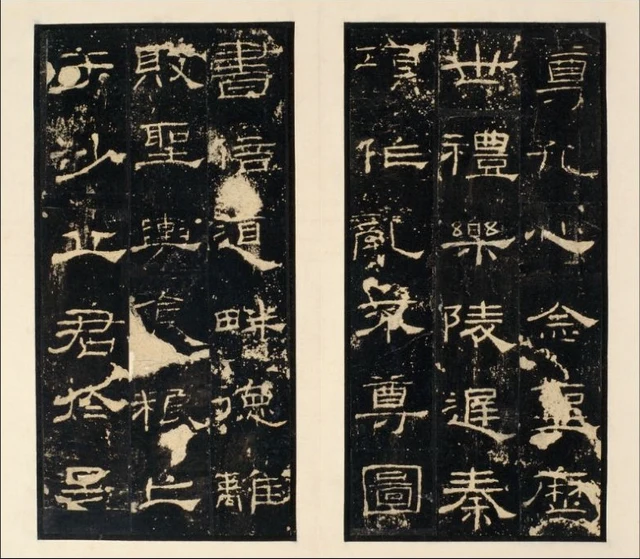
《禮器碑》“禮樂陵遲”段,保留“心”“念”“禮”“樂”“遲”等字及鄰列
圖3 右半開中列第二至第五字爲“禮樂陵遲”;最右列第三、第四字爲“心”“念”。左半開保留“書”“聖”等字,可比較細線、末端與不同程度的殘損。故宮明拓本。 官方高清放大前往館方作品頁查看原圖 ↗

王澍評此碑“瘦勁如鐵,變化若龍”。鐵說的是勁,龍說的是變;如果只記住第一半,很容易把它想成一排硬而直的細杆。故宮所引王澍評語

圖3能把兩半接回來。右半開“禮樂陵遲”一列,從密集的“禮”到上部開散的“樂”,再到左右分部的“陵”,最後是帶走之的“遲”,每一字都讓同樣窄細的線承擔不同工作。“禮樂陵遲”說的是禮樂逐漸衰微,“陵遲”在此不是刑罰名稱。句意在說明制度爲何需要整飭,字形卻讓我們看到,所謂嚴整並不等於省去轉折與差異。

“遲”的下部向右伸出,承托上面的結構;“陵”右下也有外出的末筆,卻從另一種部件關係中出發。再向右比較“心”“念”:前者以少數相互分離的線條展開,後者在“心”之上加了覆蓋的部分。下部同樣涉及“心”,整個字的高低與重心便已經不同。

“勁”可以這樣理解:細線仍足以區分部件、建立方向,使目光不在空處散失。“變”則發生在這些方向怎樣相遇、末端如何獲得分量。兩者一起存在。我們不需要把古人的讚語撤掉,只需要讓讚語一次次回到能指出位置的線條上。

記功之外,還有出資者留下的數目
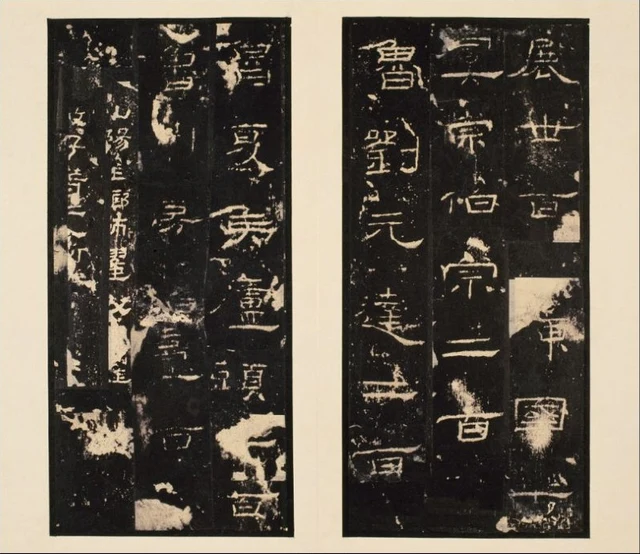
《禮器碑》題名部分,右半開可辨“魯劉元達二百”等記錄
圖4 右半開左列可讀“魯劉元達二百”,中列末兩字也爲“二百”。本文按冊頁所見討論題名與數額,不據此單幅攝影擅定它在原碑陰面或哪一側的精確位置。故宮藏同冊明拓。 官方高清放大前往館方作品頁查看原圖 ↗

這頁的文字突然變得像一筆一筆留下的登記。“魯劉元達二百”,記錄籍地、題名和二百這一捐資數額;旁列末尾,又出現一個“二百”。它們把注意力從前面的禮樂敘述帶到具體參與者及其貢獻。這裏不必把每個姓名背熟,至少應看見:立在廟裏的這件石刻,也給參與者留下了可以被讀出的所在。

兩個“百”的橫畫、框內空處與損泐狀態並不相同。一個在右半開左列最下方,另一個在中列最下方;它們都跟在“二”後面。數字重複,寫成的輪廓與保存下來的表面卻沒有完全重合。左半開還可見尺寸更小、排列更緊的文字,它們使題名頁具有不同於正文六字短列的局部密度。

這時再想“變化若龍”,便不能只理解爲某一根捺畫漂亮。變化還包括正文與題名、字大與字小、相同數額的重複與不同的書寫安排。不過,這些差別不足以單獨數出寫碑者有幾人。它們首先告訴我們,整件碑的文字任務,比一段連續的頌詞更複雜。

回到開頭的“更”。它仍然是那幾道細線和一個變寬的末端。現在我們也看見,細線所維繫的,不只是某個字的漂亮骨架,還使器物名稱、歷史敘述與題名數目能夠在石面上各自成立。《禮器碑》的分量,常常就在這些纖細卻不肯退場的線條裏。

可選附讀|一條細線,經過了哪些時間

在《木頭裏留着那一年的旱》裏,我曾區分留下來的痕跡與替痕跡隨口編出的故事。木頭的一道窄圈不能獨自證明乾旱,碑拓上的一塊露白也不能自動證明書寫者故意飛白。

可以再看圖2,把“王”的細橫、字旁的不規則白塊、條紙接縫分開指一次。它們都在同一幅影像裏,卻有不同的來歷。要判斷某一筆在拓制時已經斷開到什麼程度,需要拿其他年代的同一字來比;只靠現在這頁,不能把每道斷口準確分配到某一年。

SAE總綱的因果射線把注意力引向事情如何留在後來的形狀裏。這裏最有用的是讓比較多出一層耐心:文字的形狀傳下來了,傳下來的方式也在畫面裏。我們能欣賞“王”的組織,同時承認有些淺色邊緣還需要另一份拓本才能說清。《SAE判斷力與美學》

版本、釋文、圖片與許可說明

本文爲官方影像細讀,不是原碑或拓本現場觀看。原碑156年、本文明拓本及後世裝裱、題簽、攝影分別記述。書寫者姓名不詳;本文不把歷代關於人數或風格的推測寫成確證。

四圖均來自數字文物庫新00044512同一藏品的公開高清放大器。瀏覽器按頁面正常顯示攝影後截取整開,裁去外部工具欄與縮略導航,保留圖內紙邊、損泐、拼接與原有痕跡;沒有去水印、去印、補筆、修復、改色或AI生成。內置約756—793像素寬的圖供閱讀,核筆請打開相應官方高清viewer。原始截圖與裁切座標另見IMAGE_NOTES;網頁接縫與原碑行界分開判斷。

引文用通行字與現代標點便讀。“韓勅”的“勅”保留館錄用字;“禮樂陵遲”釋爲禮樂衰微;圖4不將題名裏每個字強行劃定爲名或字,也不由單幅冊頁重建原石四面的精確位置。

圖像版權屬於故宮博物院及相關權利人。未取得再發布許可,不宣稱開放授權;公開再傳播與商業出版需另行核權。官網允許個人研究訪問不等於授予再出版許可。

參考資料

Episode 12 — Sources / 来源与版本核对

Accessed and read 2026-10-19 UTC. Image evidence was viewed, not inferred from metadata alone.

1. Palace Museum, 《明拓鲁相韩勅造孔庙礼器碑册》
https://www.dpm.org.cn/collection/impres/234635.html
Establishes the Han stone's date (Yongshou 2, 156 CE), Han Chi's temple and ritual-equipment project, this album's Ming rubbing date, preservation of front/back/sides, Zhang Boying's label, and Wang Shu's assessment “瘦劲如铁,变化若龙”. The article quotes that brief historical criticism and tests it against the actual figures. Its location wording “今存山东曲阜孔庙” is not used as the current location without correction; see source 4.
2. Palace Museum Digital Cultural Relics, accession 新00044512
https://digicol.dpm.org.cn/cultural/detail?id=f13cba4b1de349ca92bc1f3be913ecf3&source=6
Confirms the specific Ming album and supplies the linked image list and official high-resolution viewers. The original stone and this paper object are consistently distinguished. The public image list contains 39 images; these list indices are not assigned original leaf numbers.
3. Public image-list page
https://digicol.dpm.org.cn/cultural/listCulturalImage?id=f13cba4b1de349ca92bc1f3be913ecf3
Source of public image identifiers and thumbnail URLs. Four normal public viewers were opened in a cloud browser and captured. Detailed coordinates, links, and limitations: IMAGE_NOTES.md.
4. Agency for Cultural Affairs / Tokyo National Museum, 文化遺産オンライン《礼器碑》
https://online.bunka.go.jp/heritages/detail/537055
Its explanation locates the original stone at the Han and Wei Stone Inscriptions Exhibition Hall in Qufu, Shandong. This record's displayed rubbing is not the Palace Museum album reproduced here; only its statement about the original stone's present location is used.
5. Du Zhiyong, 《礼器碑》及其刊定, 中国社会科学报/中国社会科学网, 2024-01-05
https://www.cssn.cn/skgz/bwyc/202401/t20240105_5725750.shtml
Cross-checks that the stone moved from the eastern side hall of Qufu's Confucius Temple to the Han and Wei inscription hall, and supplies a contextual transcription of the ritual-equipment passage. This article's reconstructions of the sequence of carving and possible novelty of donor recording are interpretive proposals, not established facts adopted here.
6. 秦汉, 《木头里留着那一年的旱》, aesthetic ray 05
https://nondubito.net/essays/aesthetics/ray05.html?lang=zh
English official page/title: https://nondubito.net/essays/aesthetics/en/ray05.html?lang=en — The Wood Still Holds That Dry Year. Read in full. Used only in the optional appendix: a surviving trace is not itself a complete causal story; additional comparison is required to assign a cause or date to damage. No personality judgment is derived from calligraphy.
7. 《SAE判断力与美学》
https://self-as-an-end.net/papers/sae-judgment-aesthetics.html
Read for the causal ray and judgment framework. The appendix applies the distinction to the visible 王, irregular damage and album joins. The traditional formal analysis stands independently.

Transcription and evidence boundaries

Quoted classical passages retain their complete quoted extent and receive full prose explanations in each language. Forms such as 韓勅, 禮, 器, 車 and 遲 remain visible alongside translated meanings. The donor numeral 二百 is not assigned an unverified coin denomination. The writer's name and number of hands are not established. No paper is dated to 156 CE. Cut-mounting and damage are not presented as voluntary brush actions.

圖像來源與使用說明

本站保留適合閱讀的 WebP 配圖,包括局部與不同角度。點擊配圖可前往館方作品頁;完整原圖不再隨網站發布。以下尺寸、檔名、裁切座標與校驗值為原始素材的存檔記錄,並非網頁預覽圖的規格。

Published image provenance / 配图来源

Collection record / 馆藏记录

Episode 12 — Image provenance / 图片处理说明

Same physical album / 同一实体册页

All four figures reproduce the Palace Museum's Ming-dynasty rubbing album 《鲁相韩勅造孔庙礼器碑》, accession 新00044512, from its public Digital Cultural Relics collection. The Han stone was erected in 156 CE; the paper rubbing is Ming, not Han. The depicted short columns are cut-mounted album strips, not the original stone's complete columns.

Collection record: https://digicol.dpm.org.cn/cultural/detail?id=f13cba4b1de349ca92bc1f3be913ecf3&source=6

Actual acquisition, 2026-10-19 UTC

1. Read the public collection page and its linked image-list iframe. Its 39 entries provide the public image identifiers and thumbnail resources. The four selected entries are recorded in `IMAGE_MANIFEST.json`; the 39-page numbering below refers to that image list, not an asserted original leaf or stone-face number.
2. Open each public `culturalImage/detail/{imageId}` link in the assistant's cloud Chromium browser. The normal site navigation resolves to `/iView?id={imageId}&v=1` and displays its zoomable photographic image.
3. Wait for the actual image to render, inspect it, and save the browser screenshot at 1165 × 747 pixels. Original captures were retained during preparation as `sources/viewer_25.png`, `viewer_39.png`, `viewer_23.png`, `viewer_10.png`.
4. Crop only exterior viewer interface/background using the exact boxes below. Save the result as JPEG, quality 94. The crop coordinates use Pillow's `(left, top, right, bottom)` convention, right and bottom exclusive. The four JPEGs contain the whole photographed album opening, including the paper borders and neighboring columns. No glyph-only cutout was made.

| Fig. | Public list index | Image ID | Saved source | Crop box | Embedded image | Dimensions |
|---|---:|---|---|---|---|---|
| 1 | 25 | 65d1005874754947bd37a041671d574c | sources/viewer_25.png | (197, 4, 953, 690) | images/page_25.jpg | 756 × 686 |
| 2 | 39 | eb72e8a6e6be4657b977b7e8a405c7b7 | sources/viewer_39.png | (182, 4, 968, 690) | images/page_39.jpg | 786 × 686 |
| 3 | 23 | 82977bf6cd644bfd904f5d33fe91d888 | sources/viewer_23.png | (182, 4, 968, 690) | images/page_23.jpg | 786 × 686 |
| 4 | 10 | 97f9220710314c8187c9536219eeab06 | sources/viewer_10.png | (179, 4, 972, 690) | images/page_10.jpg | 793 × 686 |

High-resolution viewers, respectively:
- https://digicol.dpm.org.cn/culturalImage/detail/65d1005874754947bd37a041671d574c
- https://digicol.dpm.org.cn/culturalImage/detail/eb72e8a6e6be4657b977b7e8a405c7b7
- https://digicol.dpm.org.cn/culturalImage/detail/82977bf6cd644bfd904f5d33fe91d888
- https://digicol.dpm.org.cn/culturalImage/detail/97f9220710314c8187c9536219eeab06

The embedded files are reading-size browser captures, not downloaded full-resolution masters. Use the official viewers for close examination beyond this resolution. The public thumbnails show a different overlaid display pattern; no watermark was removed from those thumbnails. The figures were captured separately from the normal public viewer's own rendered image. There was no generative processing, restoration, recoloring, mark or seal removal, inpainting, or synthetic drawing.

Actual visual checks / 实际看图

The writer inspected the four rendered official images and the resulting local crops. A second source reviewer and the series editor independently inspected the four local figures. Specific checks:
- Fig.1: left opening middle column 宅 (third), 廟 (fourth), 更 (fifth); right opening far-right 造立禮器樂之; next column 音符鐘磬瑟鼓.
- Fig.2: right opening middle column 王 (third), preceded by 百 and followed by 不; left opening right column 王 (fourth), preceded by 天.
- Fig.3: right opening middle column 禮樂陵遲 (second–fifth); far-right 心念 (third–fourth).
- Fig.4: right opening left column 魯劉元達二百; adjacent middle column ends 二百. The exact original stone face is not assigned from this cut-mounted image alone.

Reproduction and rights

The four embedded figures were independently reproduced from the unaltered original captures using the listed coordinates and JPEG quality 94; all four file hashes matched exactly. Research captures and thumbnail reference sets are not included in this reading release. The local `build.py` reproduces the reading pages from the included images and full Markdown files; it does not automate new browser captures or obtain high-resolution masters.

图像版权属于故宫博物院及相关权利人。未取得再发布许可,不宣称开放授权。 用户允许在研究包中使用并明确说明未获许可的图像;这不构成对外再出版授权。公开传播或商业出版须另行核权。 / Copyright remains with the Palace Museum and any other relevant rights holders. No republication license has been obtained; no open license is claimed. Further public or commercial redistribution requires separate rights clearance.